 By James Hebert
 January 15, 2026
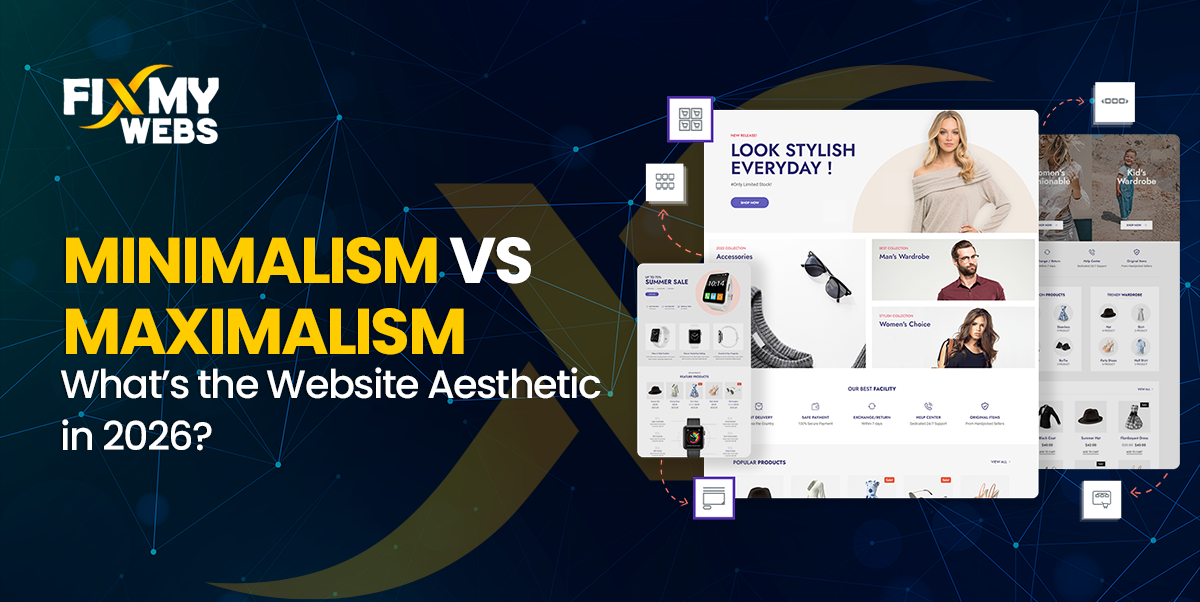
Minimalism vs Maximalism | What’s the Website Aesthetic in 2026?
Website design has always reflected cultural shifts, user behavior and technological evolution. From the cluttered layouts of the early internet to the ultra-clean interfaces of the 2010s, design trends continuously adapt to how people consume information online. As we move deeper into 2026, one major debate dominates the web design landscape Minimalism vs Maximalism.
Both aesthetics are powerful, visually striking and purpose driven but they serve very different goals. Businesses today are no longer asking what looks good, but rather what works best for their audience. In this blog, we explore how minimalism and maximalism are shaping modern websites in 2026, when each approach works best and how brands can choose the right aesthetic to drive engagement, trust and conversions.
Understanding Website Aesthetics in 2026
A website’s aesthetic is no longer just about visual appeal it’s about experience, storytelling and usability. With shorter attention spans, AI-driven personalization and mobile first behavior dominating user interactions, design decisions must be intentional.
In 2026, aesthetics are shaped by:
- Faster web technologies
- Immersive UI/UX expectations
- Emotion driven branding
- Accessibility and performance standards
- Brand differentiation in saturated markets
This is where the contrast between minimalism and maximalism becomes especially relevant.
What Is Minimalist Web Design?
Minimalist web design focuses on simplicity, clarity and functionality. It removes visual noise and distractions, allowing users to focus on core messaging and actions.
In 2026, minimalism has evolved beyond white space and black typography. It now integrates subtle motion, intelligent layouts and strategic color usage while maintaining a clean interface.
Key Characteristics of Minimalist Websites
- Limited color palettes
- Clean typography with strong hierarchy
- Purposeful white space
- Simple navigation structures
- Fast loading, performance optimized pages
- Clear calls to action
Minimalism isn’t about doing less it’s about doing exactly what’s needed, nothing more.
Why Minimalism Still Thrives in 2026
Minimalist design remains dominant because it aligns perfectly with modern user behavior. People want quick answers, smooth navigation and intuitive interfaces.
Benefits of Minimalist Design
- Improved usability: Users can find information faster
- Better performance: Fewer elements mean faster load times
- Stronger focus: CTAs stand out without competition
- Professional credibility: Clean designs build trust
- SEO advantages: Performance and UX improvements support rankings
Industries like SaaS, fintech, healthcare, corporate services and B2B platforms continue to rely heavily on minimalist design to convey professionalism and reliability.
What Is Maximalist Web Design?
Maximalism web design is the bold opposite of minimalism. It embraces rich visuals, expressive typography, layered layouts and immersive storytelling.
Rather than reducing elements, maximalist design carefully curates abundance. When done correctly, it feels intentional not chaotic.
Core Elements of Maximalist Websites
- Bold and experimental typography
- Vibrant and contrasting color schemes
- Animated visuals and interactions
- Layered layouts and textures
- Story driven design sections
- Strong brand personality
Maximalism thrives on emotion and memorability.
Why Maximalism Is Making a Strong Comeback in 2026
In a world where many websites look similar, maximalism helps brands stand out. As competition increases, companies are seeking visual differentiation and deeper emotional connections.
Advantages of Maximalist Design
- High brand recall: Visually memorable experiences
- Stronger storytelling: Ideal for lifestyle and creative brands
- Emotional engagement: Designs feel expressive and human
- Unique positioning: Breaks away from template driven websites
- Social media appeal: Highly shareable visuals
Industries like fashion, entertainment, creative agencies, media brands, eCommerce and personal brands are increasingly embracing maximalist aesthetics.
Minimalism vs Maximalism: A Side by Side Comparison
|
Aspect |
Minimalism |
Maximalism |
|
Visual Style |
Clean, simple |
Bold, expressive |
|
User Focus |
Speed & clarity |
Experience & emotion |
|
Brand Voice |
Professional, refined |
Creative, energetic |
|
Performance |
Faster by default |
Requires optimization |
|
Best For |
SaaS, corporate, services |
Fashion, media, creative |
|
Risk |
Too generic |
Overwhelming if misused |
Neither approach is inherently better the effectiveness lies in how well it aligns with your brand and audience.
How User Experience Shapes the Choice in 2026
User expectations in 2026 demand both aesthetic appeal and seamless usability. Even maximalist websites must remain intuitive, accessible and performance optimized.
Key UX considerations influencing design choice:
- Mobile first interactions
- Accessibility compliance
- Micro interactions for feedback
- AI-driven personalization
- Voice and gesture based navigation
- Cognitive load management
Modern design success depends on balance not extremes.
The Rise of Hybrid Design: Best of Both Worlds
One of the most important trends in 2026 is hybrid design combining minimalist structure with maximalist elements.
How Hybrid Design Works
- Clean layouts with bold accent sections
- Simple navigation paired with rich visuals
- Minimalist UI enhanced with expressive animations
- Neutral foundations with vibrant storytelling components
Hybrid design allows brands to maintain usability while expressing creativity, making it the most versatile approach for modern websites.
Which Aesthetic Is Right for Your Brand?
Choosing between minimalism and maximalism depends on several strategic factors.
Choose Minimalism If:
- Your brand prioritizes trust and clarity
- You operate in a competitive professional industry
- Your website focuses on conversions
- Performance and SEO are top priorities
- You want long term design longevity
Choose Maximalism If:
- Your brand thrives on creativity and emotion
- Visual storytelling is central to your message
- You want to stand out visually
- Your audience values experience over speed
- Your product or service is lifestyle driven
The wrong aesthetic can confuse users but the right one amplifies your brand voice.
Technology’s Role in Website Aesthetics in 2026
Modern web technologies allow designers to push creative boundaries without sacrificing performance.
Key technologies influencing design aesthetics:
- Advanced CSS animations
- WebGL and immersive visuals
- AI-powered personalization
- No code and low code design tools
- Faster frameworks and CDNs
- Enhanced accessibility tools
These innovations allow both minimalism and maximalism to coexist effectively in 2026.
Common Mistakes to Avoid
Regardless of aesthetic choice, brands must avoid these pitfalls:
- Designing for trends instead of users
- Overusing animations without purpose
- Ignoring accessibility standards
- Sacrificing performance for visuals
- Copying competitors instead of differentiating
- Neglecting mobile experience
Aesthetic success lies in strategy, not style alone.
The Future of Website Aesthetics Beyond 2026
Looking ahead, website aesthetics will continue to evolve toward:
- Hyper personalized interfaces
- Emotion aware design systems
- Adaptive layouts based on user behavior
- AI-generated design variations
- Deeper integration of UX psychology
The line between minimalism and maximalism will blur further, giving rise to experience first design philosophies.
Also worth reading:
10 Website Features Every Modern Business Must Have in 2025
How a Modern Website Builds Trust and Converts Visitors Into Paying Clients
The Impact of Typography in Web Design How Fonts Shape Your Brand
Final Verdict: Minimalism or Maximalism in 2026?
In 2026, the question isn’t which aesthetic web design wins its which aesthetic serves your brand best.
Minimalism offers clarity, speed and professionalism.
Maximalism delivers personality, emotion and memorability.
The most successful websites don’t blindly follow trends they strategically apply design principles to guide users, tell stories and drive results.
Whether you choose minimalism, maximalism or a hybrid approach, one thing is clear intentional design is the real trend in 2026.